The RevGrowth Engine
Where growth becomes a daily discipline, not an annual event.
Every cycle improves two things, not one. The result: annual growth rate. The system: growth reliability.
One hour. Your data. Zero cost.
The RevGrowth Engine
A plan you revisit once a year moves you once a year.
Most growth plans do not fail in the room where they are built. They fail in the eleven months after, when the deck gets filed, the initiatives lose their owners, and the numbers get reviewed against nothing in particular.
Nothing was decided badly. The plan simply stopped being the thing anyone measured against.
That is not an execution problem you fix with more effort. It is a cadence problem. The absence of a governed rhythm that keeps the plan in front of the people accountable for it, on a schedule, against a fixed benchmark instead of a fading memory of last quarter.
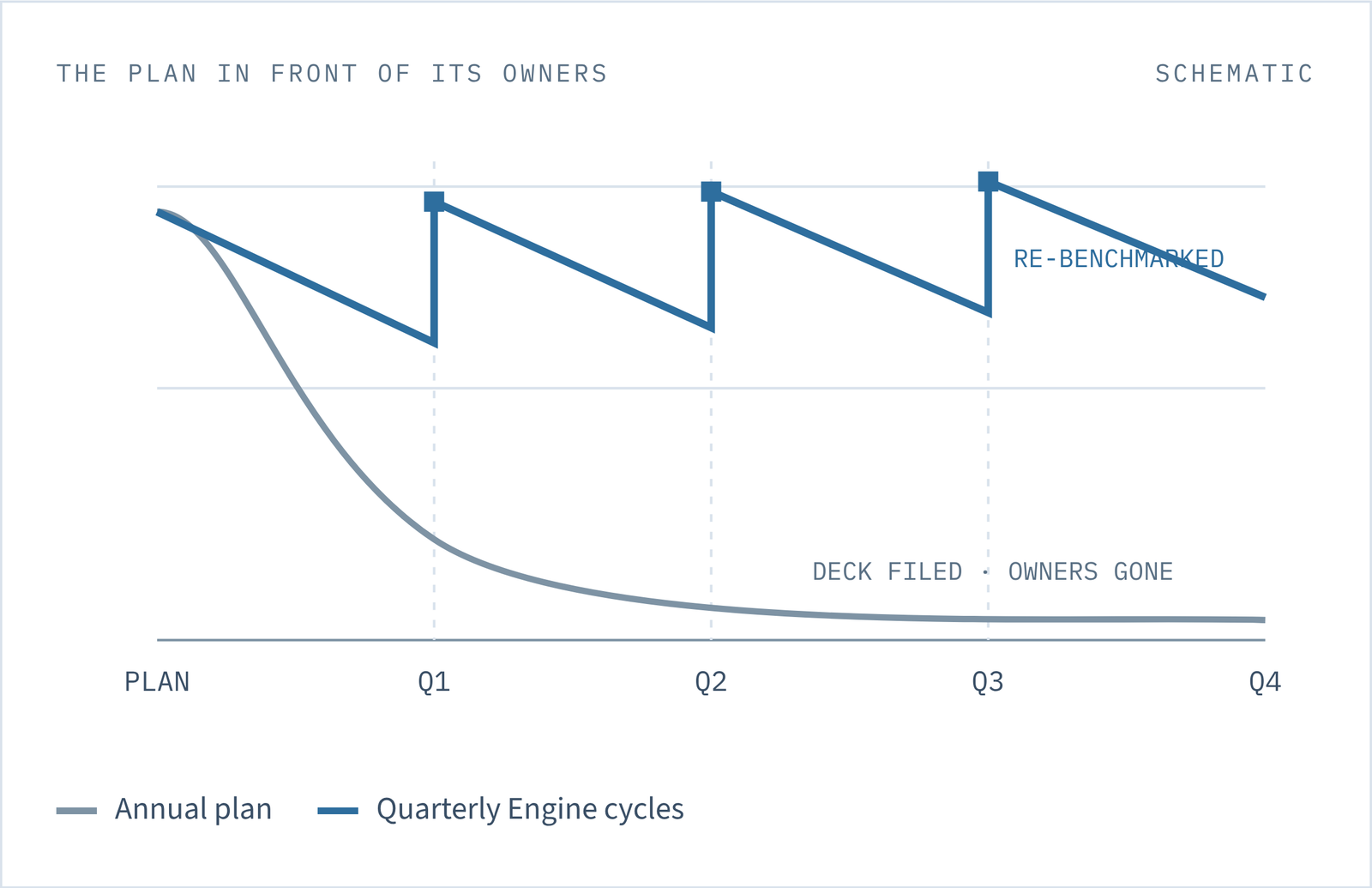
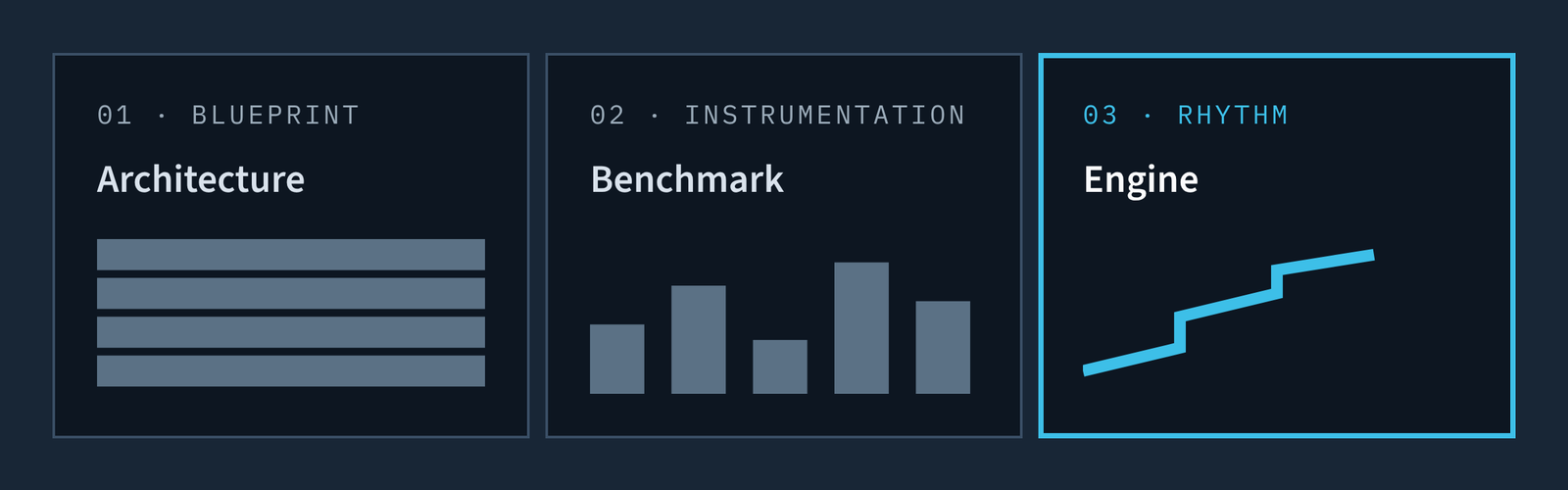
The RevGrowth Engine is that rhythm. It is the third instrument on the panel, after the architecture and the benchmark, and it is the one that turns a diagnosis into a habit.
What You Get
Three components, working in sequence.
Component 1
Action Planning
Translate benchmark gaps into a quantified plan and sequenced roadmap.
Assign an owner and a date to every initiative.
Set the KPIs that will prove movement.
Component 2
Execution and Operating Rhythm
Run the roadmap on a fixed cadence.
Review the numbers in a standing forum, not an ad hoc one.
Turn what works into a documented playbook.
WATCH FOR
Operating rhythms tend to fade once they have nothing to measure against, sliding back into status reporting.
Component 3
Governance
Review results against the benchmark, not against last quarter.
Decide what to keep, kill, or resequence.
Re-benchmark to open the next cycle.
How It Runs
One loop, run every cycle.
Every cycle either confirms the system is working or shows you exactly what to adjust. Nothing drifts, because nothing waits to be noticed.
Measure
Against the benchmark.
Quantify
Find the gap, and put a dollar figure on what it costs you.
Decide
A governed decision with an owner and a date.
Execute
Over once cycle. Then the cycle repeats.
What works becomes a playbook. That is the part most transformation efforts skip. They produce a result and no reusable method, so the next team relearns it from scratch.
Output: The Playbook
A change that works once is luck. A change that works in a playbook is capability.
The Evidence
Built from 200+ companies, not opinions.
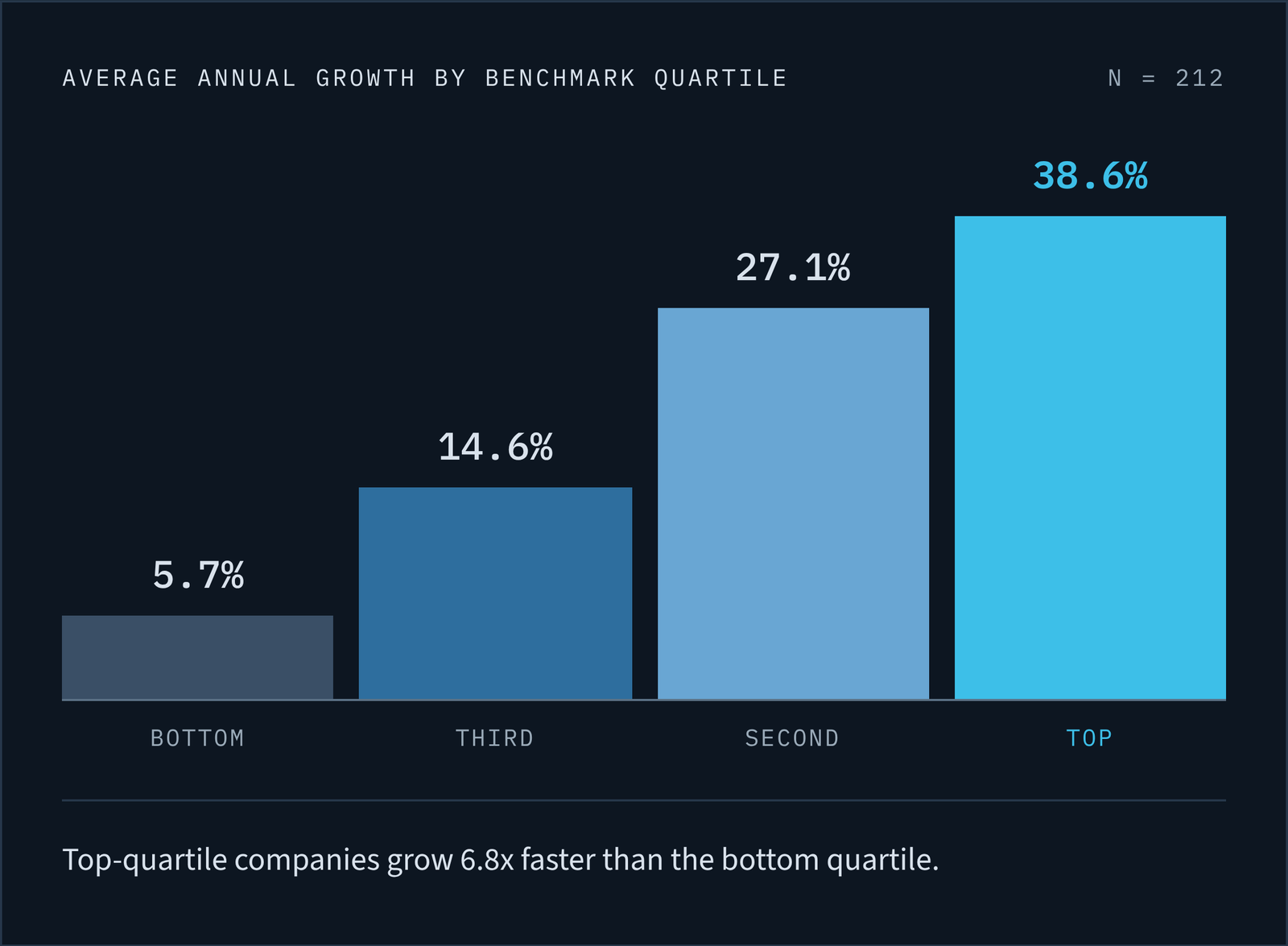
Across the RevGrowth Benchmark dataset of over 200 mid-market industrial companies, the growth rate compounds with the quartile.
That spread is not talent or luck. It is cadence. The companies at the top are not finding bigger opportunities than everyone else. They are running the same loop more often and letting fewer cycles pass without a governed decision.
Strategic 1% improvements, sequenced and executed on a fixed rhythm, compound into 20 to 40% annual growth in revenue, profit, and enterprise value.
Why It Compounds
Every cycle improves two things, not one.
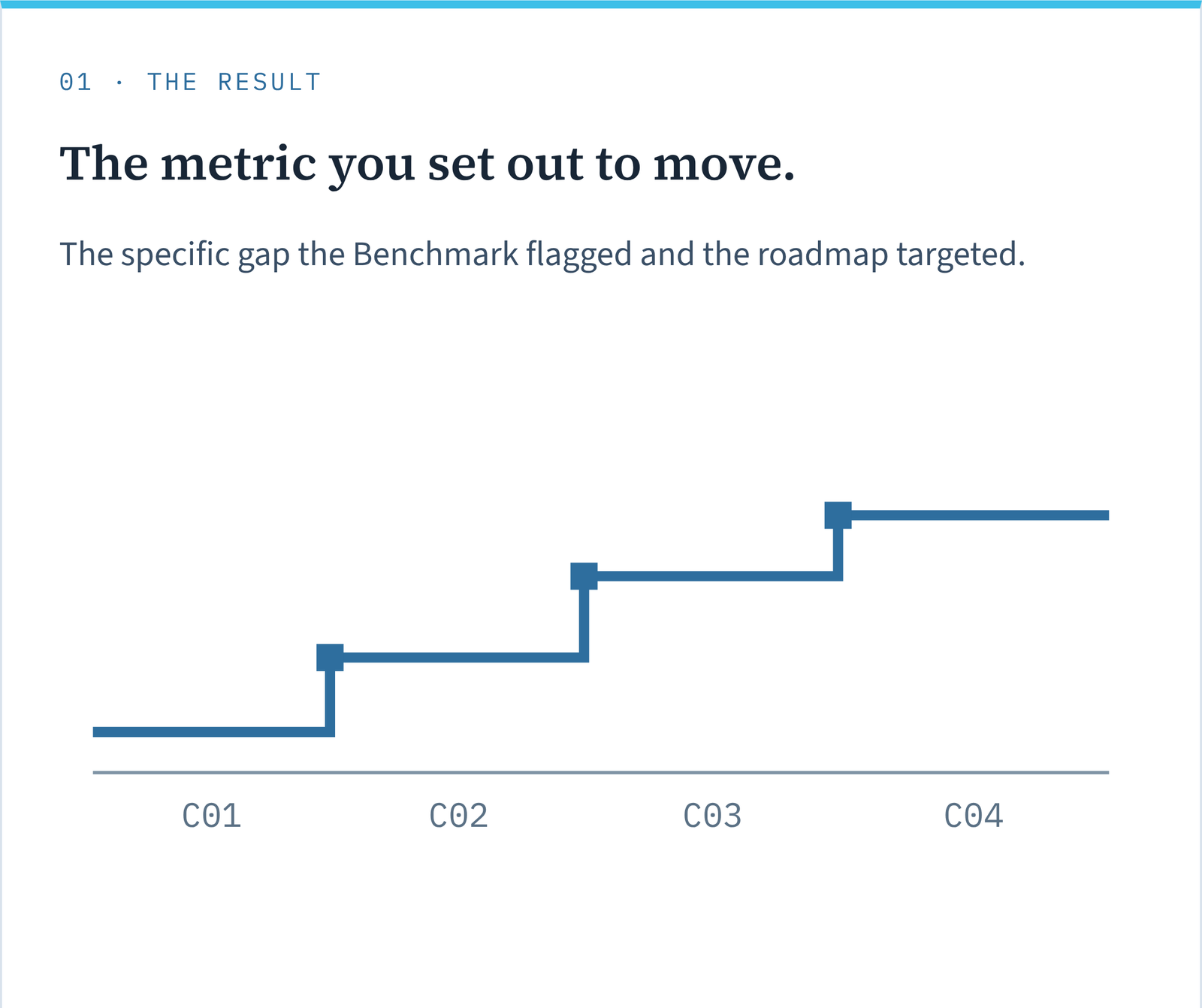
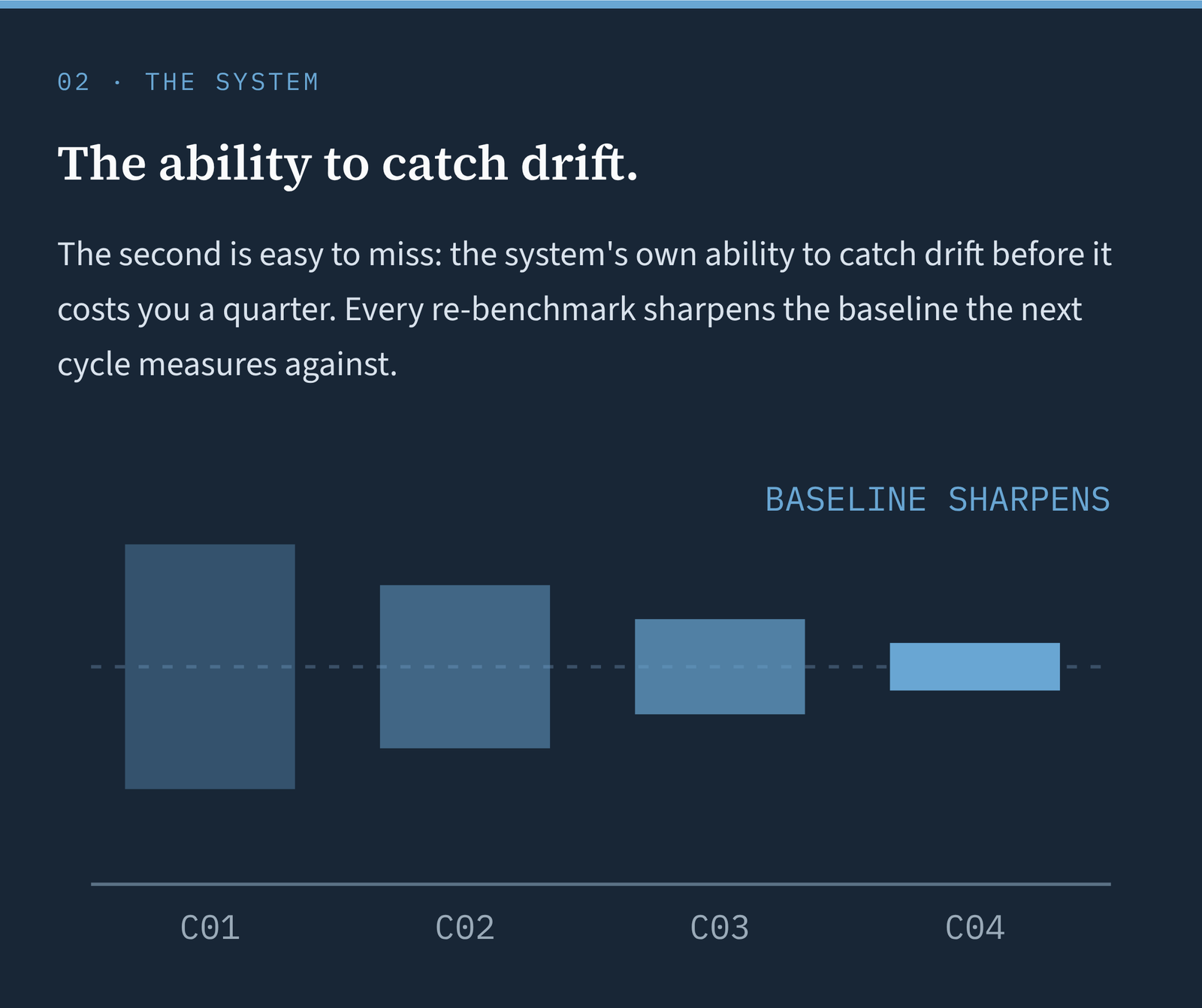
So the Engine does not just produce a result. It gets better at producing the next one.
The system gets better at producing growth as you run it.
What you're probably thinking.
Common questions we get about the RevGrowth Engine.
We already do QBRs.
QBRs review outcomes. Governance reviews the system that produced them. One tells you the quarter was bad; the other tells you why the next one will be.
We have dashboards.
Dashboards report revenue. The Engine measures your ability to create it - and pairs every metric with a decision right. A number nobody is empowered to act on is a rearview mirror.
We've tried operating cadences. They fade.
They fade because there's nothing underneath them. A cadence with no benchmark has nothing to measure against, so it degrades into status reporting within two quarters. Re-benchmarking is what keeps the meeting worth attending.
The team is already stretched thin.
The Engine replaces meetings rather than adding them. Most leadership teams already spend four to six hours a month on growth conversations that don't end in decisions.
How fast do we see results?
First cycle is 90 days. It runs longer when the sequence starts with a structural fix, because those have to land before the metrics mean anything. You'll have the roadmap, the KPIs, and the owners inside the first few weeks either way.
The RevGrowth Simulation
Your growth potential, before you spend a dollar.
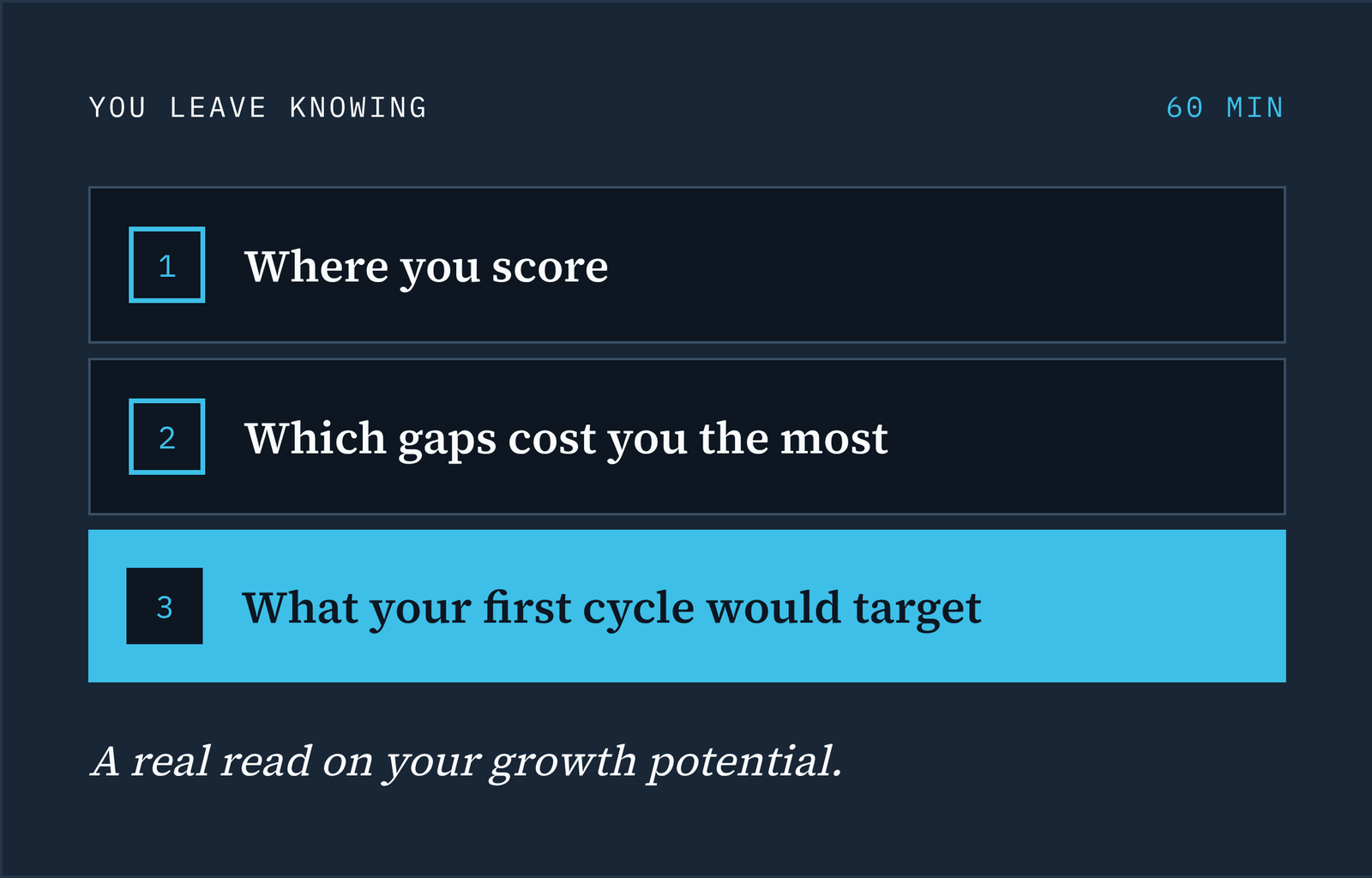
The RevGrowth Simulation is a free, one-hour working session. We run your data through the RevGrowth Benchmark and show you where you score, which gaps cost you the most, and what your first cycle would target. You leave with a real read on your growth potential.
If the Engine is not the right answer for you, we will say so in the same hour.
One free hour. Your data. Zero cost.